Rwanda Intercity Bus Math Favors Kigali Early Morning Departure Over Afternoon Road Block Delays
Rwanda's intercity bus network is a marvel of efficiency on paper, but anyone who has stood at Kigali's Nyabugogo bus station at noon knows the reality: buses leave late, roads clog, and a two-hour trip can stretch into four. The conventional wisdom in travel blogs is to book any available seat and go. But a closer look at the math—fare ranges, delay patterns, and operator behavior—shows that the early morning window, roughly 5:00 a.m. to 7:00 a.m., offers a consistently better deal in time and money. This is not a secret known only to locals; it is a structural feature of how Rwanda's bus network interacts with police routines, market schedules, and road conditions.
Why Kigali's Dawn Buses Beat Afternoon Traffic
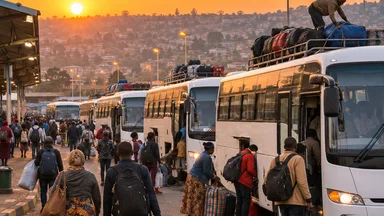
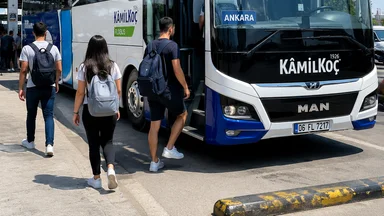
The main bus station in Kigali empties by 6:00 a.m. Buses that depart between 5:30 and 7:00 a.m. carry the first wave of travelers—market vendors, civil servants, students—and they roll out with near-full loads. By 8:00 a.m., the station is already quieter, and the buses that leave after 9:00 a.m. often wait for more passengers, creating a cascade of delays.
Afternoon departures face a different problem: road block delays. Rwanda National Police conducts random checkpoints on major routes, often starting around 10:00 a.m. and intensifying after lunch. A single checkpoint can add 10–20 minutes; on the Kigali–Gisenyi route, drivers report four to six checkpoints in the afternoon, totaling one to two hours of waiting. Morning buses, by contrast, encounter few or none.
Market days compound the issue. In towns like Muhanga and Rubavu, weekly markets draw crowds that spill onto roads by 2:00 p.m. A bus leaving Kigali at 3:00 p.m. for Gisenyi can lose another 30–45 minutes navigating market traffic. Morning buses arrive in Gisenyi or Musanze by lunchtime, well before market congestion builds.
The time saving is not marginal. A morning bus from Kigali to Musanze (Volcanoes National Park) typically takes 2–2.5 hours; the same trip at 2:00 p.m. can take 3.5–4 hours. For travelers on a tight schedule—say, catching a gorilla trek briefing at 3:00 p.m.—the morning departure is the only reliable choice.
The Cost Gap: Early vs. Late Departures
On paper, fares for Kigali–Gisenyi are uniform across operators: roughly 2,500–3,500 RWF (about US$ 2–3) as of late 2024. But the real cost differs. Late buses sometimes add an unofficial fuel surcharge, especially if the driver anticipates delays that increase fuel consumption. This is not advertised; it is a cash request at the terminal, often 500–1,000 RWF extra.
Wait times also carry a hidden cost. A traveler who arrives at Nyabugogo at 1:00 p.m. for a 2:00 p.m. bus may find the bus is not full and the driver waits another 30–45 minutes. During that wait, the traveler buys snacks or drinks from station vendors—another 500–1,000 RWF. The total outlay for an afternoon trip can be 20–30% higher than for a morning trip, even though the base fare is the same.
Early buses run fuller, which lowers the per-seat overhead for operators. Some companies, like Omega Carriers, offer slightly lower fares for the first departure of the day (around 2,500 RWF) compared to midday departures (3,000 RWF). This is not a fixed policy, but travelers who ask at the ticket window sometimes get a discount for the 5:30 a.m. bus.
There is also an opportunity cost. Arriving in Gisenyi by 9:00 a.m. rather than 3:00 p.m. gives a full day for activities—beach time, boat trips on Lake Kivu, or onward travel to Rubavu town. That extra half-day of productive time is worth far more than the fare difference.
Where Rwanda's Bus Network Bends the Guidebook Advice
Standard travel guides advise showing up at the bus station 30 minutes early and buying a ticket on the spot. That works for morning departures but fails in the afternoon. Companies like Virunga Express and Omega Carriers post hourly schedules, but real gaps are 90–120 minutes in off-peak hours. A traveler arriving at 11:00 a.m. for an 11:00 a.m. bus may find the previous bus left at 10:00 a.m. and the next one is not until 12:30 p.m.
Afternoon drivers often skip scheduled stops to make up time. A bus from Kigali to Musanze that normally stops in Muhanga may bypass it entirely, stranding passengers who expected to board there. This is not malicious; drivers are under pressure to reach the destination before dark or before road blocks multiply. The result is an unreliable network for anyone trying to board at intermediate towns after 10:00 a.m.
Weekend mornings are busier than weekday afternoons. Many travelers assume weekends are chaotic, but the early Saturday buses (5:30–7:00 a.m.) run smoothly because road blocks are fewer and market traffic is lighter. Sunday afternoons, by contrast, see heavy return traffic from weekend trips, with delays similar to weekday afternoons.
The guidebook advice to “buy a ticket a day in advance” is sound for morning departures but less critical; morning buses rarely sell out except on major holidays. For afternoon departures, advance purchase guarantees a seat, but the bus may still be delayed. The real variable is not the ticket but the departure time.
The Road Block Factor: Police Checks and Market Days
Rwanda National Police conducts random checkpoints on all major routes, particularly on the Kigali–Gisenyi road (RN15) and the Kigali–Musanze road (RN4). These checkpoints are more frequent after 10:00 a.m., with a peak between 2:00 and 4:00 p.m. Drivers estimate that afternoon buses face four to six stops, each lasting 10–20 minutes, adding up to one to two hours total. Morning buses (before 8:00 a.m.) typically encounter zero or one checkpoint.
Market days add another layer. Muhanga's market on Tuesdays and Fridays, and Rubavu's market on Saturdays, draw large crowds that block roads near the town centers. A bus passing through Muhanga at 2:00 p.m. on a Tuesday can lose 30 minutes just navigating the market perimeter. The same bus at 8:00 a.m. passes through with no delay.
Road construction near Rubavu, as of early 2025, has shifted delay patterns. The Kigali–Gisenyi route is undergoing upgrades that create single-lane sections, adding 15–30 minutes in the afternoon when traffic is heavier. Morning buses rarely queue at these sections.
These factors are predictable. Travelers can check the Rwanda National Police social media for checkpoint announcements, or ask at the bus station the day before. But the simplest hedge is to take a morning bus and avoid the uncertainty altogether.
Booking Tactics: Reserved Seats vs. Walk-On Gamble
Reserving a seat via the Yego Moto app or at the station a day ahead is recommended for afternoon departures, where buses are less frequent and seats are limited. For morning departures, walk-ons usually find a seat, but after 7:00 a.m., the risk of being squeezed into an aisle seat or standing increases. An early departure ensures seat choice and luggage space.
Walk-ons in the afternoon often wait 45–90 minutes for the next bus. At Nyabugogo, the waiting area is crowded and hot, with limited shade. Travelers who arrive at 1:00 p.m. for a 2:00 p.m. bus may find the bus is not full and the driver delays departure for 30 minutes. The total wait can exceed an hour, making the trip feel longer than it is.
Reserving a seat does not guarantee on-time departure, but it does guarantee a seat on a specific bus. Some operators, like Virunga Express, allow phone reservations without prepayment; others require a deposit. The Yego Moto app, originally for motorcycle taxis, now covers some bus routes and allows digital payment, reducing the need for cash.
For travelers on a budget, the walk-on gamble can pay off if they arrive very early (before 6:00 a.m.) or very late (after 6:00 p.m., when demand drops). But the middle of the day—between 10:00 a.m. and 4:00 p.m.—is the worst time to walk on. The math favors reservation or early arrival.
What the Data Stales: Fare Hikes and Route Changes
Fares from 2023 may be 10–15% higher now. In 2023, Kigali–Gisenyi was around 2,500 RWF; by early 2025, it is closer to 3,000–3,500 RWF. Fuel price fluctuations and inflation drive these increases. The Rwanda Transport Authority (RTA) publishes official fare ranges on its website, but they are updated irregularly. Travelers should check the RTA site or ask at the station for current rates.
The new Kigali bus terminal at Nyabugogo, which replaced the old station in 2022, changed the dynamics of departures. The terminal is larger and more organized, but the walk from the main road to the bus bays is longer. Morning buses leave from specific bays, while afternoon buses may load from overflow areas, adding confusion.
Road construction near Rubavu has shifted delay patterns. The Kigali–Gisenyi road upgrade, expected to continue through 2026, creates bottlenecks that are worse in the afternoon. Some drivers now take alternative routes through Nyamasheke, adding 30–45 minutes but avoiding construction. These changes are not yet reflected in guidebooks.
For the most current information, travelers should consult the Namibia intercity bus article for a comparison of how different countries handle similar issues, though the specifics differ. In Rwanda, the key is to treat published fares and schedules as rough guides, not guarantees.
Packing for the Window: What to Bring on a Dawn Bus
Small bills are essential for fare and snacks. ATMs in Kigali open after 8:00 a.m., so early travelers should have cash ready. A 5,000 RWF note can be broken at the station, but smaller denominations (500, 1,000 RWF) are more useful for vendors who may not have change.
A light jacket is advisable for mountain routes (Kigali–Musanze, Kigali–Gisenyi) where temperatures before 7:00 a.m. can drop to 15°C (59°F). By midday, it can reach 25°C (77°F), so layers are practical. The bus may not have air conditioning, and windows may be open, so a jacket also serves as a buffer against dust.
Snacks and water are important because bus stops are scarce early in the morning. The first stop on the Kigali–Musanze route is often in Muhanga, about 1.5 hours into the trip. Vendors at the station sell samosas, bananas, and bottled water, but prices are higher than in town. Bringing a reusable water bottle and filling it at the station's tap (if available) saves money.
Some buses have USB ports for phone charging, but not all. A power bank is a safer bet. The station has charging points, but they are often occupied. For a similar analysis of early-morning strategies in a different context, see the Mexico City market math article for a lesson in timing. The principle is the same: the early window offers better value and fewer hassles.
Counter-Arguments: When Afternoon Departures Make Sense
Not every traveler should default to a dawn bus. Those staying in Kigali's outskirts, such as the KG 9 Avenue area near Kimihurura, face a 30–45 minute moto-taxi ride to Nyabugogo before 6:00 a.m., when moto fares are higher (around 1,500–2,000 RWF vs. 1,000 RWF midday). The extra cost and early wake-up may cancel the benefits for short-hop trips like Kigali–Muhanga (under 1.5 hours even with delays).
Travelers with heavy luggage may prefer afternoon buses because roof-loading is more leisurely and porters are available. In the morning rush, porters are busy, and luggage can be stacked hastily, risking damage. Afternoon buses also have fewer passengers, so overhead racks may be emptier.
Some routes, such as Kigali–Kibuye (Karongi), have fewer checkpoints and lighter afternoon traffic. The road to Kibuye is less traveled than the Gisenyi or Musanze routes, and market-day congestion is minimal. For these routes, the time difference between morning and afternoon may be only 20–30 minutes, making the early start less compelling.
Finally, travelers prone to motion sickness may prefer the gentler afternoon drive. Morning drivers on mountain routes often take curves at higher speeds to maintain schedule, while afternoon drivers, stuck in traffic, proceed more slowly. For those who get queasy on winding roads, the trade-off of extra travel time for a smoother ride might be worthwhile.
Seasonal Variations: Rain, Holidays, and Harvest
Rwanda's two rainy seasons (March–May and October–December) shift the calculus. Morning buses still avoid checkpoints, but heavy rain can cause landslides on the Kigali–Gisenyi route, especially near the Nyungwe Forest area, leading to hour-long detours regardless of departure time. In these months, afternoon buses often face compounded delays from rain and checkpoints, while morning buses may encounter fog that reduces visibility and slows travel.
During the dry season (June–September and January–February), morning buses are most efficient. Visibility is good, roads are dry, and checkpoints are less frequent because police prioritize dry-weather operations. However, the harvest period (July–August) brings heavy truck traffic on RN4 and RN15, which can slow all buses after 8:00 a.m. Morning buses that pass before 7:00 a.m. largely avoid the truck convoys.
Major holidays—such as Umuganura (August harvest festival), Independence Day (July 1), and Liberation Day (July 4)—see bus stations packed from 5:00 a.m. onward. Morning buses sell out days in advance, and afternoon buses face extreme delays due to road closures for parades and celebrations. Travelers during these periods should book morning tickets at least three days ahead and expect higher fares (10–20% surcharge).
Ultimately, the decision to take a dawn bus is a trade-off between comfort and efficiency. The early wake-up is inconvenient, but the payoff—a predictable, cheaper, and faster journey—is worth it for most travelers. Those who prefer to sleep in and take an afternoon bus should budget extra time and money, and accept the uncertainty. The network favors the early riser, and the math is clear.