Kathmandu Visa-on-Arrival Math Favors USD Cash Over e-Payment Terminal Rejects
Landing at Tribhuvan International Airport, a traveler's first encounter with Nepal's bureaucracy often happens at the visa-on-arrival counter. The process looks straightforward—fill a form, pay a fee, receive a stamp—but the payment step trips up a surprising number of arrivals. The terminals for credit and debit cards frequently reject transactions, and the backup line for cash moves faster. For anyone arriving with only plastic, the math quickly favors USD cash.
Why Kathmandu Airport's Visa Desk Still Prefers Greenbacks
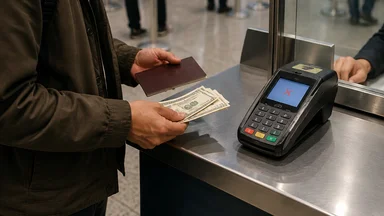
Nepal offers visa-on-arrival at Tribhuvan Airport to citizens of most countries, with multiple categories: tourist, trekker, and business. The standard payment method is cash in USD, EUR, GBP, or INR. But the airport's e-payment terminals, operated by Nabil Bank, have a reputation for being unreliable. During peak hours—morning arrivals from Delhi, Bangkok, or Kuala Lumpur—the machines often show an offline message or fail to process foreign cards.
Card networks like Visa and Mastercard are accepted in theory, but in practice, Nepal Rastra Bank's restrictions on foreign card usage can cause declines. Some travelers report that their bank blocked the transaction as suspicious, while others find the terminal simply won't read the chip. The cash-only line, on the other hand, processes applicants in roughly half the time. Immigration officers are accustomed to handling USD, and they rarely question the condition of bills as long as they're not torn or heavily marked.
The preference for USD is not arbitrary. Nepal's central bank sets exchange rates for visa fees in USD, and the airport counters are not equipped to handle dynamic currency conversion smoothly. INR and EUR are accepted, but the exchange rate applied may be less favorable. For example, a $30 visa might cost INR 2,500 at the counter, while the market rate would be around INR 2,400. The difference is small, but it adds up for families or groups.
A further nuance: the airport's currency exchange booth offers rates that are typically 2–3% worse than those in Thamel or Pokhara. Travelers who plan to exchange money at the airport for other expenses should factor in that premium. Some experienced travelers bring a small amount of USD for the visa fee and then exchange larger sums in the city. This two-step approach avoids the airport's poor rates while ensuring they have the right cash for the visa counter.
Another point worth noting: the visa fee is payable in USD even for travelers who arrive with other currencies. The counter will accept EUR or GBP, but the exchange rate applied is set by the bank and is not negotiable. In contrast, INR is accepted at par with a fixed conversion rate that is sometimes less favorable than the market rate. For example, a 15-day visa that costs $25 might be quoted as INR 2,000 at the counter, whereas the market rate would be closer to INR 1,900. The difference is not huge, but for a family of four, it can mean an extra $10–$15 in effective cost.
The Three Visa Categories and Their Fee Spreads
As of late 2024, the tourist visa fee structure is roughly: 15 days for $25–$30, 30 days for $40–$50, and 90 days for $100–$125. These amounts are set by the Department of Immigration and can shift with little notice. The trekker visa uses the same pricing, but travelers planning to trek in restricted areas also need a TIMS (Trekkers' Information Management System) card, which costs around $10–$20 and is obtained separately in Kathmandu or Pokhara.
The business visa category requires a letter of invitation from a Nepali company and costs $50–$80, depending on duration. Overstay penalties are $3–$5 per day, and immigration officers are strict about counting days from the date of entry. A common mistake is assuming the visa starts from the date of issue, but it runs from the day you land.
Travelers from SAARC countries (India, Bangladesh, Sri Lanka, Pakistan, Maldives, Bhutan, Afghanistan) have different rules: Indian nationals do not need a visa at all, while others pay reduced fees. For example, a 30-day visa for a Bangladeshi citizen costs roughly $10–$15. It pays to check the latest fee schedule on the Department of Immigration website before departure, as rates have been known to change mid-year.
One key trade-off: the 15-day visa is the cheapest but offers little flexibility if your plans change. Many travelers opt for the 30-day visa even if they plan to stay only two weeks, because the extra $15–$20 provides a buffer against flight delays or spontaneous side trips. The 90-day visa, while expensive, is the best value for trekkers who need time to acclimatize and explore remote areas. For example, a trek to the Everest Base Camp region typically takes 14–18 days, but many trekkers add a few days in Kathmandu and Pokhara, making the 30-day visa a safer choice than the 15-day option.
Where the e-Payment Terminals Fail
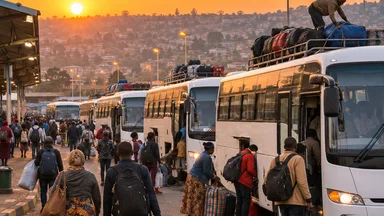
The visa-on-arrival hall at Tribhuvan Airport has around a dozen counters, but only a few are equipped with card terminals. During busy periods—especially the autumn trekking season (September–November) and spring (March–May)—the queues for the cash-only counters are noticeably shorter. Travelers who attempt to use cards often end up redirected to an ATM inside the arrivals area, which is frequently empty or out of service.
Nepal's banking infrastructure is improving, but the airport terminals are a weak link. The machines run on a local network that occasionally drops, and staff are not always trained to troubleshoot. One traveler reported that after three failed attempts with a Visa card, an officer simply waved him to the cash line and said, "Next time, bring dollars." The Department of Immigration has talked about upgrading the system, but as of early 2025, the cash line remains the most reliable option.
Another quirk: the terminals do not accept contactless payments. Apple Pay and Google Pay are not supported, so even if a traveler has a digital wallet, they must use the physical card. For those who rely solely on a phone for payments, the visa-on-arrival process can become a stressful scramble for cash.
There is a counter-argument: some travelers report that using a chip-and-PIN card from a European bank works more reliably than a magnetic-stripe card from the US. The terminals are set up for chip transactions, and US cards often still use signatures. If you have a card with a chip and a PIN, your chances of success may be higher. However, this is not guaranteed, and the cash line is still the safer bet.
Another data point: during the 2024 peak season, a survey of online travel forums found that roughly 60% of travelers who attempted to pay by card at the airport had to switch to cash. The remaining 40% succeeded after one or two tries. That means the odds are against card users. For a traveler who arrives with only a card, the stress of a failed transaction can sour the first impression of Nepal. Bringing cash eliminates that risk entirely.
Common Paperwork Mistakes That Get You Turned Around
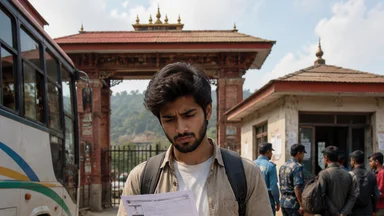
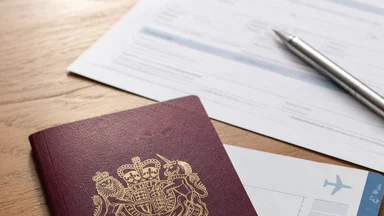
The visa application form is simple—name, passport number, address in Nepal, duration of stay—but small errors cause delays. The most common mistake is failing to bring two passport-sized photos. The form requires one photo to be attached, and a second is needed for the visa sticker. Without extras, travelers must use a photo booth near the counter, which charges around $5 for a set of four prints.
Hotel bookings must be printed; digital confirmations on a phone are not always accepted. Immigration officers want to see a physical address, and if the booking is under a different name or missing a contact number, they may ask for additional proof. Another frequent issue: travelers who have previously extended their visa and did not carry the old extension receipt. The system records extensions, but officers sometimes request the physical document.
Choosing the wrong visa category is another pitfall. Some travelers select "trekker" when they only plan to visit cities, or "tourist" when they intend to work remotely. While Nepal does not have an official digital nomad visa as of 2025, working on a tourist visa is technically not allowed. Officers may ask about the purpose of stay, and inconsistency with the form can lead to denial or a shorter duration.
The form must be filled in black ink only. Blue or other colors are rejected, and the counter does not provide pens. Travelers who arrive unprepared must borrow from someone in line, which slows everyone down. A small thing, but it trips up dozens of arrivals each day.
A less obvious mistake: not having the exact address of your first hotel. Some travelers write "Kathmandu" or "Thamel" as the address, but officers want a specific hotel name and location. If you don't have a reservation yet, it's acceptable to write a hostel or guesthouse you plan to use, but be prepared to answer questions. Having a printed booking confirmation with the address in Nepali script can speed things up, as officers sometimes struggle with Romanized spellings.
Overland Entry Quirks at Kakarbhitta and Sunauli
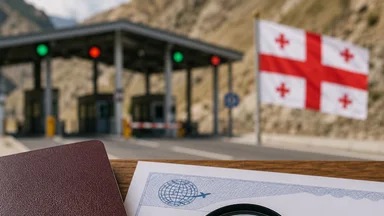
Nepal's land border crossings—Kakarbhitta in the east (connecting to India's West Bengal) and Sunauli (Bhairahawa) in the south (near Gorakhpur)—also offer visa-on-arrival, but with different quirks. At Kakarbhitta, the immigration office is small and often understaffed. Processing can take 30–60 minutes, and the office closes at 5 p.m. local time. Travelers arriving after hours must wait until the next morning or risk crossing illegally.
Sunauli is busier, with a larger office, but it lacks e-payment entirely. Cash in USD or INR is the only option. The exchange rate at the border is worse than in Kathmandu, so it's wise to bring enough USD from home. Indian nationals do not need a visa, but they must carry a valid passport or voter ID. However, non-Indian travelers crossing from India need to ensure they have the correct visa category, as the officers at Sunauli are known to be strict about overstay penalties.
Another land border, at Kodari (Tibet side), is currently closed to foreigners due to the 2015 earthquake damage and subsequent political tensions. It may reopen in the future, but as of early 2025, it remains off-limits. For those planning to enter Nepal overland, the best advice is to cross during daylight hours and have exact cash ready.
A less-known crossing is at Mahendranagar (Banbasa) in the far west, which connects to India's Uttarakhand. This crossing is quieter and faster than Kakarbhitta or Sunauli, but the immigration office is small and may not have change for large bills. Travelers using this route should carry small denominations of USD or INR. The office hours are also limited, typically 8 a.m. to 4 p.m., so plan accordingly.
The trade-off between flying into Kathmandu and crossing overland is not just about cost. Overland entry avoids the airport's e-payment problems entirely, but it adds travel time and requires navigating Indian border procedures. For travelers already in India, the overland route can save money and provide a more gradual entry into Nepal. But for those flying from overseas, the airport's cash line is still the most straightforward option, despite its quirks.
Stale Data Alert: What May Have Changed Since 2025
Visa fees, exchange rates, and terminal reliability are all subject to change. The figures in this article are based on reports from late 2024 and early 2025. Nepal's central bank occasionally adjusts the USD-denominated fees to reflect inflation, and the Department of Immigration has piloted a new e-payment system at Tribhuvan Airport that may expand. Some travelers in mid-2025 reported that card acceptance had improved, with fewer terminal outages.
There have also been proposals for a digital nomad visa, which would introduce a new category with different fees and requirements. As of this writing, no such visa exists, but the Ministry of Home Affairs website should be checked for updates. The overstay penalty rate could also change; it has remained at $3–$5 per day for several years, but a revision is possible.
Land border offices may extend their hours, or new crossings may open. The Kakarbhitta office has been rumored to be moving to a larger facility, but no timeline has been announced. The safest approach is to treat all specific numbers as rough estimates and verify with official sources before departure.
Another potential change: the introduction of a fully automated e-gate system for visa-on-arrival. In 2024, the Department of Immigration announced plans to install e-gates for faster processing, but as of early 2025, only a few were operational, and they still required cash payment. If the e-gates expand and integrate with card payments, the advantage of cash may diminish. However, such upgrades in Nepal typically take years, so cash is likely to remain king for the near future.
Packing the Right Currency Mix for a Smooth Arrival
For a hassle-free arrival, carry USD in crisp $20 and $100 notes. Newer bills are preferred; old or worn notes may be refused. Bring enough to cover the visa fee plus a buffer of $50–$100 for incidentals like taxi fare or a meal. Exchange a small amount at the airport for immediate needs—the rate is slightly worse than in Thamel, but it saves time.
Avoid carrying Indian rupee notes above the 500 denomination. Nepal's central bank has occasionally restricted acceptance of high-value INR notes, and some vendors refuse them. Smaller denominations of INR (100, 50, 20) are widely accepted. Keep photocopies of your passport and the visa form in a separate bag; losing the original form means starting over.
If you prefer not to carry cash, consider bringing a prepaid travel card loaded with USD. These cards are sometimes accepted at the airport terminals, but not always. As a backup, stash a $100 emergency note in your shoe or bag. The math is simple: the cost of carrying a little extra cash is far less than the stress of a rejected card at the counter.
For those who want to minimize cash, the Kerala visa window comparison shows that e-visas can sometimes bypass airport queues. Nepal offers an e-visa for some nationalities, but it requires advance application and is not available at land borders. The trade-off is convenience versus flexibility.
A final tip: if you do use the cash line, have the exact amount ready. Immigration officers rarely have change for large notes, especially during busy periods. If you present a $100 bill for a $30 visa, you may be asked to wait while the officer finds change, which can take several minutes. Breaking larger bills at the airport currency exchange before joining the queue can save time.
Ultimately, the visa-on-arrival math favors the prepared traveler. A few dollars in cash, a printed form, and a spare photo can turn a potential headache into a five-minute stop. The system works—just not always the way the signs suggest.