Georgia Guesthouse Math Favors Tbilisi Old Town Side Street Over Freedom Square Premium
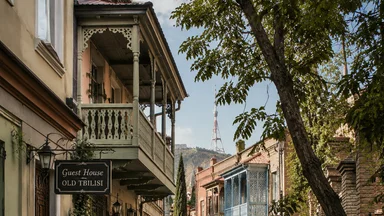
I first landed in Tbilisi on a cloudy Tuesday in late September. The taxi from the airport wound through streets lined with crumbling balconies and new glass towers, and I remember thinking: where you stay here really shapes how you experience the city. Over the next week, I bounced between a guesthouse in a quiet Old Town side street and a hotel near Freedom Square, and the difference in my daily spending was stark. This isn't a review of either property — both were perfectly fine — but a breakdown of the cost math that every traveler should consider before booking.
Freedom Square vs. Side Street: A €30–50 Nightly Gap
The price difference between a guesthouse in the Old Town side streets and a comparable room near Freedom Square is the single biggest variable in a Tbilisi lodging budget. As of late 2024 listings on Booking.com and Airbnb, a private room with a shared bathroom in a side street guesthouse runs roughly €25–40 per night. A similar private room — same size, same general level of cleanliness and amenities — within a five-minute walk of Freedom Square costs about €50–70. That's a gap of €25–30 at the low end and €30–40 at the high end.
For a standard three-night stay, that difference adds up to €75–120. Over a week, you're looking at €175–280 in savings. That's enough for a group tour to Kazbegi (roughly €30–40 per person) plus several meals at mid-range restaurants. The premium isn't tied to quality — many side street guesthouses are older, family-run buildings with more character and better hosts. The premium is almost entirely location cachet.
Some travelers argue that Freedom Square's convenience justifies the cost. It's the central hub, with metro access, major bus routes, and a concentration of restaurants and shops. But I found that the side streets of the Old Town are only a ten- to fifteen-minute walk from the square. The question becomes: is paying €30–50 more per night worth saving a short walk? For most budget travelers, the answer is no.
Seasonal fluctuations matter. In peak summer months (June–August) and around New Year, prices can shift 15–20% higher across the board. I've seen Freedom Square listings jump to €80–100 per night in August, while side street guesthouses stay closer to €35–50. Conversely, in the low season (November–February, excluding holidays), both categories drop, but the gap remains proportionally similar. Always check current listings — the data here is based on 2024–2025 snapshots, not a guarantee.
What That Premium Actually Buys (and Doesn't)
Freedom Square is undeniably central. It sits at the intersection of Rustaveli Avenue and several key streets, with the metro station right there. Buses and marshrutkas stop within meters. But here's the thing: the side street guesthouses are also well-connected. From my guesthouse on a quiet lane off Leselidze Street, I could reach the same metro station in about twelve minutes on foot. The time savings of staying right on the square are marginal — maybe five minutes each way.
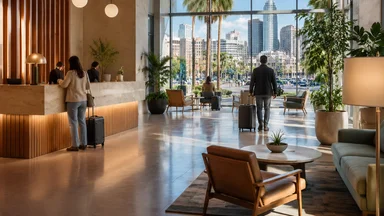
What you do get with the premium is address cachet. Freedom Square is the postcard image of Tbilisi — the ornate buildings, the statue of St. George, the sense of being at the heart of things. Some travelers find that worth paying for. But the practical benefits are thin. Many Freedom Square hotels lack breakfast, while side street guesthouses often include a simple spread of bread, cheese, eggs, and tea. That's a saving of €3–6 per day on breakfast alone.
Noise is another factor. Freedom Square is a major traffic hub and a gathering place for events. During my stay near the square, I was woken at 7 a.m. by street cleaning trucks and again at midnight by a group of tourists singing. In the side street guesthouse, the loudest sound was the occasional dog bark from a neighboring courtyard. For light sleepers, the side street option is clearly better.
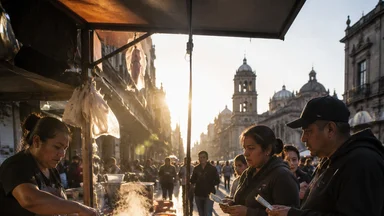
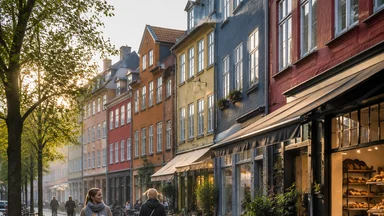
There's also the question of local life. Side streets are where you find the bakeries selling fresh khachapuri for €1–2, the tiny grocery stores, the neighbors hanging laundry. Freedom Square is tourist central — restaurants with English menus and higher prices, souvenir shops, and currency exchange kiosks. If you want to feel like you're in Tbilisi rather than a travel brochure, the side streets deliver.
But the convenience of Freedom Square does matter for some travelers. If you're catching an early morning tour or need to meet a driver at a central point, the square's accessibility can save you stress. For those with limited time — say, a one-night layover — the premium might be justified. However, for a longer stay, the side streets offer more for less.
Let's take a concrete example. The guesthouse I stayed at, "Guesthouse Nino" on Leselidze Street, charged €30 per night in October 2024. It included a simple breakfast of bread, cheese, eggs, and tea. A comparable private room at "Hotel Astoria" on Freedom Square was €65 per night, with no breakfast. Over five nights, that's a saving of €175 — enough for a day trip to Kazbegi and dinner at a nice restaurant. The walk from Guesthouse Nino to Freedom Square was about twelve minutes, which I barely noticed.
Another example: "Guesthouse Mzia" on a side street near the Metekhi Church, at €35 per night, versus "Boutique Hotel 32" on Freedom Square, at €70 per night. The guesthouse had a shared bathroom but a lovely courtyard; the hotel had a private bathroom but no outdoor space. Again, the walk difference was about ten minutes. The choice depends on what you value more — privacy or character.
Hostel Dorm Math: When a Bed Costs Less Than a Coffee
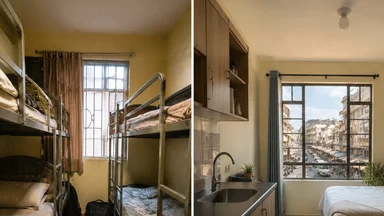
For solo travelers on the tightest budgets, hostels are the obvious alternative. Dorm beds in Tbilisi's Old Town typically run €10–15 per night in 2024–2025 listings. That's less than a cappuccino at a Freedom Square café (€3–4). Private rooms in the same hostels cost about €25–35 per night, which overlaps the low end of guesthouse pricing. The trade-off is privacy: in a dorm, you share space with strangers, but you gain access to common areas and kitchens.
Hostel kitchens are a real cost saver. Cooking your own meals can cut daily food spending by €5–10 compared to eating out. A traveler staying in a hostel dorm for a week might spend €70–105 on lodging and €30–50 on groceries — total under €160. That's less than three nights in a Freedom Square hotel room. The social aspect is a bonus for some; for others, it's a drawback. I've met travelers who loved the hostel vibe and others who found it exhausting.
But hostels aren't for everyone. If you need quiet to work or sleep, or if you value having your own space, a side street guesthouse is a better fit. The price difference between a hostel private room and a guesthouse private room is often just a few euros — €25–35 vs. €25–40. The guesthouse usually includes breakfast and more personal attention from the host. For a small premium, you get a lot more comfort.
One thing to watch: hostel quality varies widely. Some are clean and well-managed; others are rundown. Read recent reviews carefully, especially for noise and cleanliness. The same applies to guesthouses, but the smaller scale often means more consistent care. I'd recommend checking the date of the most recent review — anything older than six months may not reflect current conditions.
Consider "Hostel Tbilisi" on Leselidze Street: a dorm bed at €12 per night, with a kitchen and common area. The reviews mention friendly staff but occasional noise from the street. For a social traveler, it's a great deal. For a light sleeper, the same money might be better spent on a private room at a guesthouse like "Guesthouse Nino" for €30, which includes breakfast and quieter surroundings.
Short-Let Apartments: The Middle Ground That Demands Research
Short-let apartments through platforms like Airbnb offer a middle ground between guesthouses and hotels. An entire apartment near Marjanishvili Square — a lively area about a 15-minute walk from the Old Town — costs roughly €30–50 per night in late 2024 listings. That's comparable to a guesthouse private room but gives you a full kitchen and separate living space. For groups of two or three, splitting the cost can bring the per-person rate down to €15–25 per night.
But there are hidden costs. Cleaning fees can add 20–30% to the nightly rate. I saw one listing at €35 per night with a €60 cleaning fee for a three-night stay — that effectively raised the cost to €55 per night. Minimum stays of three to five nights are common, which can be restrictive for short trips. And host verification is uneven: some hosts are professional and responsive; others are absent or unreliable.
The best use of a short-let apartment is for longer stays of a week or more, or for groups. If you're traveling solo for a long weekend, a guesthouse is simpler and often cheaper. The key is to read the full breakdown of fees before booking. Sort by total price, not nightly rate. And check the cancellation policy — some hosts offer free cancellation up to 48 hours before arrival, while others are non-refundable.
Neighborhood matters. Apartments in Marjanishvili or Vera are generally cheaper than those in the Old Town or near Freedom Square. They also offer more local character — markets, bakeries, and fewer tourists. But you'll need to factor in transport costs. A metro ride is €0.50, so even if you're a 20-minute walk from the center, daily transport adds only €1–2. That's negligible compared to the lodging savings.
For example, an apartment on Marjanishvili Street with two bedrooms costs €40 per night plus a €50 cleaning fee for a week. That's about €47 per night, or €23.50 per person for two travelers. Compare to a hotel room near Freedom Square at €70 per night for a double room. The apartment saves you €23 per night, and you get a kitchen and more space. The walk to Freedom Square is about 20 minutes, or you can take the metro for €0.50.
The Transit Cost Trade-Off: Walking vs. Marshrutka vs. Metro
Tbilisi's public transport is cheap and reasonably efficient. The metro fare is about €0.50 per ride, and marshrutkas (minibuses) are €0.30–0.40. A side street guesthouse is typically a 5- to 15-minute walk from the nearest metro or bus stop. Freedom Square gives you immediate access to multiple lines. But the daily transport savings from staying central are tiny — maybe €1–2 per day. Over a week, that's €7–14, which is less than the cost of one night's lodging difference.
Walking is often the best option within the Old Town. The area is compact and pedestrian-friendly, though the hills can be tiring. If you're staying in a side street near the Narikala Fortress cable car, you might face a steep climb. Taxis within the Old Town cost €2–5 — useful if you're carrying luggage or tired. But relying on taxis daily would eat into your savings. For most travelers, a comfortable pair of walking shoes is enough.
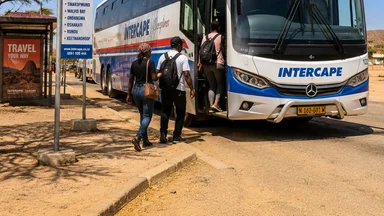
Marshrutkas are an adventure. They follow fixed routes but have no fixed stops — you flag them down and tell the driver where you want to get off. They're cheap and frequent, but can be confusing for first-time visitors. The metro is simpler: two lines, clean stations, and signs in English. A single journey covers most of the city. For day trips to Mtskheta or the mountains, marshrutkas from Didube station are the way to go.
The real transport cost consideration is for day trips. If you're staying in a side street guesthouse, you might need to take a marshrutka or taxi to the meeting point for a group tour. That adds €1–3 each way. But again, this is a minor expense compared to the lodging savings. Some guesthouse hosts can arrange transport or recommend reliable drivers, which simplifies things.
Let's compare two hypothetical travelers: one staying at a Freedom Square hotel (€65/night), the other at a side street guesthouse (€30/night). Both take one metro ride per day (€0.50) and one marshrutka (€0.40). The hotel guest spends €65.90 per day on lodging and transport; the guesthouse guest spends €30.90. Over a week, the difference is €245. That's a significant amount, even if the hotel guest walks less.
Food Budget: Where You Sleep Shapes What You Eat
Your choice of accommodation directly affects your food spending. Side street guesthouses are often near local bakeries and small markets. A fresh khachapuri costs about €1–2, and a filled pastry for lunch is similar. Dinner at a local eatery — a family-run place with a menu in Georgian — runs €5–8 for a main course. In the Freedom Square area, restaurants catering to tourists charge €8–15 for mains, and drinks are marked up. Over a week, the food cost difference between the two neighborhoods can be €5–10 per day.
Guesthouses that include breakfast save you another €3–6 daily. That's €21–42 per week. Combine that with lower lunch and dinner costs, and a side street guesthouse could save you €50–100 per week on food alone. That's enough for a nice dinner at a place like Barbarestan (€20–30 per person) or a bottle of Georgian wine from a local shop (€5–10).
Hostel kitchens offer the biggest savings. A week's groceries from the Dezerter Bazaar or a local supermarket costs about €30–40. That covers breakfast, lunch, and dinner with some snacks. The trade-off is time — cooking takes effort, and you miss out on the experience of eating out. For a short trip, I'd rather save the kitchen time and explore the city's food scene.
One practical tip: carry a reusable water bottle. Many locals drink tap water, but I cannot guarantee its safety for visitors. Bottled water is cheap (€0.50–1 per liter), but it adds up. Alternatively, buy a large bottle and refill it at your accommodation. That's a small saving, but every euro counts when you're on a budget.
Consider this: at Guesthouse Nino, breakfast is included. I'd have bread, cheese, eggs, and tea, then head out. For lunch, I'd buy a khachapuri from a bakery on Leselidze Street for €1.50. Dinner at a local restaurant like "Café Linville" near the guesthouse cost me €7 for a main course. Total daily food cost: €8.50. At a Freedom Square hotel without breakfast, I'd spend €4 on a cappuccino and pastry, €10 on lunch at a tourist café, and €12 on dinner. Total: €26. The difference is €17.50 per day.
Weighing the Trade-Offs: A Balanced View
After comparing the numbers, the side street guesthouse often comes out ahead for budget-conscious travelers. But it's not a universal recommendation. The savings of €100–200 per week can be redirected toward experiences that enrich your trip — a group tour to the Kazbegi mountains (€30–40 per person), a cable car ride to Narikala Fortress (less than €1), or a meal at a restaurant like Barbarestan (€20–30). These are the things you'll remember, not the name of your hotel.
That said, side street guesthouses aren't perfect. Some lack 24-hour reception — if you're arriving late, confirm check-in arrangements in advance. Cancellation policies can be stricter than hotels. And if you have mobility issues, the hills and uneven sidewalks of the Old Town might be challenging. In that case, a Freedom Square hotel with an elevator and level access might be worth the premium.
Another counterpoint: some travelers value consistency. Hotels near Freedom Square from international chains offer predictable quality, which can be reassuring. Guesthouses vary widely. I've stayed in one where the host spoke excellent English and left homemade jam; in another, the bathroom door didn't lock. Read recent reviews carefully, and consider booking a guesthouse with a high rating and multiple positive reviews.
Ultimately, the best choice depends on your priorities. If you're a budget traveler who wants to stretch your money for activities and food, a side street guesthouse is the way to go. If you value convenience and predictability, and you're willing to pay for it, Freedom Square works. But the gap in cost is large enough that I'd encourage every traveler to at least consider the side street option. The savings are real, and the experience is richer — if you're willing to walk a few extra minutes and embrace the local character.