Nairobi Hostel Math Favors Eastleigh Short-Let Over Westlands Dorm Bunk
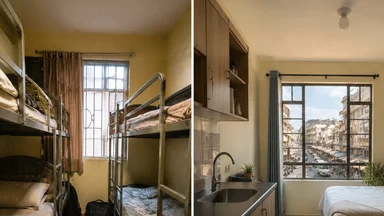
If you search for budget accommodation in Nairobi on Booking.com, the algorithm will push you toward a hostel dorm in Westlands. A bunk bed in a shared room, a locker the size of a shoebox, and a common room that smells of desperation and instant coffee. The price: roughly US$15 to US$20 per night. What the algorithm will not show you is a studio short-let in Eastleigh, a neighborhood most guidebooks treat as a footnote, where you can rent an entire apartment with a kitchen and washing machine for US$10 to US$15 per night. This is not a secret hack. It is the math that locals and regional traders have been doing for years, and it raises an uncomfortable question: why does a dorm bunk cost more than a private room?
Why a Hostel Bunk in Westlands Costs More Than a Short-Let in Eastleigh
The short answer is demand concentration. Westlands is Nairobi's expatriate and upper-middle-class corridor — wide sidewalks, branded coffee shops, craft beer bars, and a security presence that makes solo travelers feel safe. Hostels here cater to a global backpacker circuit that expects certain amenities: free Wi-Fi, a bar, organized safaris, and a social atmosphere. That premium gets baked into the bed price. A standard dorm bunk in Westlands, as of late 2024, typically runs between US$15 and US$20 per night. Some hostels with a pool or a rooftop lounge push closer to US$25.
Eastleigh, by contrast, is a dense, 24-hour Somali-dominated commercial hub. It has no hostel culture. The accommodation that exists is almost entirely short-let apartments — studios and one-bedroom units rented by the night or week through platforms like Airbnb or local agents. The going rate for a clean studio with a kitchenette and a private bathroom is US$10 to US$15 per night. Some landlords offer a weekly discount that brings the nightly cost down to US$6 or US$8 if you stay seven nights or more.
The gap is not an anomaly. It reflects two different lodging economies operating in the same city. Westlands hostels price for the international traveler who compares Nairobi to Bangkok or Medellín. Eastleigh short-lets price for the regional trader — the Ugandan or Congolese merchant who comes to buy wholesale goods and needs a cheap, private place to sleep and cook. The traveler who chooses the hostel is paying for a social experience. The trader who chooses the short-let is paying for a roof.
There is a catch, of course. Eastleigh is not for everyone. The noise levels are high, the streets are chaotic, and the neighborhood has a reputation for congestion that can make Westlands feel serene. But for the budget-conscious traveler who can tolerate a bit of grit, the value gap is hard to ignore.
The Numbers Locals Actually Pay for Lodging
To understand why the hostel-short-let gap matters, it helps to look at what Kenyans themselves spend on housing. According to the Kenya National Bureau of Statistics, the median monthly rent for a bedsitter in Nairobi — a single room with a shared bathroom and kitchen — is roughly US$80 to US$120. That works out to US$2.60 to US$4.00 per night. A Westlands hostel bunk at US$15 per night is four to six times what a local pays for a permanent room. Even the Eastleigh short-let at US$10 per night is two to three times the local median.
Hostels in Nairobi almost never offer monthly rates. Some will negotiate a weekly discount, but the standard model is pay-per-night, designed for short stays of two to five days. Eastleigh short-lets, on the other hand, are built for longer occupancy. Many landlords prefer weekly or monthly tenants because turnover costs — cleaning, key handover, platform fees — eat into margins. A traveler staying ten nights in an Eastleigh studio at a weekly rate might pay US$70 total, or US$7 per night. The same ten nights in a Westlands dorm, even with a small weekly discount, would likely exceed US$130.
The difference compounds when you factor in food. A hostel dorm almost never includes a kitchen, or if it does, it is a shared facility with limited cookware. Eastleigh short-lets almost always include a private kitchen. Cooking your own meals in Nairobi can cut daily food costs from US$10–15 (eating out) to US$3–5 (market vegetables, rice, eggs). Over a week, that saving alone can equal another night's lodging.
There is a counterpoint: hostels often include breakfast. But the breakfast is usually toast, butter, jam, and instant coffee — a meal that costs the hostel less than US$1 to provide. It is not a free lunch; it is a marketing expense built into the room rate.
Eastleigh’s Transit Web Beats Westlands’ Walkability
Westlands markets itself as walkable. And it is — within a narrow radius. You can walk from most hostels to a supermarket, a restaurant, a bank, and a bar without needing a vehicle. But if you need to go anywhere else in Nairobi, you are looking at a taxi or a ride-hail. A trip from Westlands to the central business district (CBD) by Uber costs roughly US$4 to US$6, depending on traffic. The same trip by matatu — the shared minibus that is Nairobi's de facto public transit — costs about US$0.40 to US$0.60, but the matatu stop is often a ten-minute walk from the hostel, and the service thins out after 9 p.m.
Eastleigh has a different transit logic. The neighborhood is a matatu hub. Multiple routes converge on Eastleigh's main market, connecting it to the CBD (US$0.30–0.50), to Thika Road (US$0.50–0.80), and even to long-distance buses heading to Mombasa or Kampala. The matatu stops are within a five-minute walk of most short-lets. And because Eastleigh is a 24-hour commercial zone, matatus run late. A traveler arriving at the Jomo Kenyatta International Airport at midnight can take a shuttle to the CBD and then a matatu to Eastleigh for a total of under US$3. The same trip to a Westlands hostel would require a taxi at US$15–20.
Walkability in Westlands is real but limited. You can walk to a good restaurant, but you cannot walk to the national museum, the railway station, or the bus terminus for cross-country travel. Eastleigh's walkability is worse — the streets are crowded, the sidewalks are uneven, and crossing the main road is an act of faith — but its connectivity to the wider city is superior. For a traveler who needs to move around Nairobi efficiently, Eastleigh's transit web is a genuine advantage.
The trade-off is safety perception. Westlands feels safe at night because of street lighting and security guards. Eastleigh feels edgy. But the crime statistics do not clearly favor one neighborhood over the other. Petty theft happens in both. The difference is that Eastleigh's density means more eyes on the street, which can actually deter crime.
Short-Let Platforms Reveal a Price Gap Hostels Ignore
A quick search on Airbnb for a private room in Nairobi in early 2025 shows the gap clearly. Eastleigh studios list for US$10 to US$18 per night, with many offering weekly discounts that drop the price to US$8–12. Some listings include a washing machine, a full kitchen, and a dedicated workspace. On Booking.com, a dorm bed in a Westlands hostel during the same period is US$15 to US$20 per night. No hostel in Westlands offers a private room under US$25. The cheapest private room in a hostel is usually a double with a shared bathroom, and it starts at US$30.
The platforms also reveal something about length of stay. Hostels on Booking.com rarely show a significant price difference between one night and seven nights. The nightly rate is essentially flat. On Airbnb, many Eastleigh hosts offer a 20 to 30 percent discount for weekly stays and an even larger discount for monthly bookings. The platform incentivizes longer stays, which aligns with the needs of the regional traders who are the actual target market.
There is a security dimension that the platforms do not capture. A hostel dorm provides a locker, but it is usually small — big enough for a passport and a phone, not a laptop or a camera. The rest of your belongings sit on or under your bunk. In an Eastleigh short-let, you lock the door and everything inside is yours. The trade-off is that the building security may be less formal. Some Eastleigh apartments have a guard at the gate; others rely on a sturdy door lock and the general chaos of the street. Travelers with expensive gear may prefer the hostel's perceived safety, but travelers with a backpack and a burner phone may find the short-let more practical.
Another overlooked factor is check-in flexibility. Hostels typically have a reception desk with limited hours. If your flight lands at 2 a.m., you may have to pay for an extra night or sleep in the airport. Eastleigh short-lets arranged through Airbnb or a local agent often use self-check-in with a lockbox or a security guard who holds the key. Arriving at any hour is usually fine.
What Hostels Sell That Short-Lets Don’t: Social Space
Hostels exist to solve a problem that short-lets do not: loneliness. A solo traveler in a foreign city wants to meet people, share a beer, find a group for a safari, or get tips from other travelers. The common room, the bar, the organized pub crawl — these are the products that hostels sell, and they are genuinely valuable. A traveler who stays in an Eastleigh short-let may find the silence oppressive after a few days. There is no built-in community. You have to go out and find it.
Some hostels in Westlands also offer organized day trips to Nairobi National Park or the Giraffe Centre, which can be cheaper than arranging them independently because the hostel bundles transport and guide. Short-let guests have to arrange their own tours, which may cost more or require more effort. For a traveler who values convenience and social connection, the hostel premium is a rational expense.
But the social value diminishes after a few days. Most hostel common rooms follow a predictable script: people compare travel stories, discuss border crossings, and complain about the Wi-Fi. After a week, the novelty fades. For longer stays, the short-let's privacy and quiet become more attractive. A remote worker who needs to take Zoom calls in a quiet environment cannot do that from a hostel bunk. An Eastleigh short-let with a desk and a door that closes is a better tool for that job.
There is a middle ground: some hostels now offer private rooms with shared common areas. In Nairobi, these are rare and priced at US$30–40 per night, which erases the cost advantage. The best solution may be to mix — spend a few nights in a hostel to build a social network, then move to a short-let for the rest of the stay. That hybrid approach is common among experienced budget travelers in Southeast Asia and Latin America, but it is rarely discussed in the context of Nairobi.
Who Actually Stays Where: A Look at Two Traveler Profiles
To understand which lodging type makes sense for which traveler, it helps to consider who actually stays in each neighborhood. Eastleigh short-lets are popular among regional traders — merchants from Uganda, the Democratic Republic of Congo, Somalia, and other East African countries who come to Nairobi to buy wholesale goods. Many of these traders stay for a week or more, need a private room to secure their merchandise, and prefer to cook their own meals to save money. A 2023 report by the African Centre for Cities estimated that over 15,000 regional traders pass through Eastleigh each month, and a large share of them use short-let apartments. The neighborhood's proximity to the main wholesale markets — such as the Eastleigh Mall and the nearby Kamukunji market — makes it a practical base.
Westlands hostels, by contrast, are filled with European and American backpackers, volunteers from nearby NGOs, and the occasional digital nomad. The average age is lower, the stay is shorter, and the budget is often larger than the Eastleigh trader's. A volunteer working with a nonprofit in Kibera may find the hostel's social scene essential for mental health. A truck driver resting between runs to Kampala needs a quiet room and a hot plate.
The two groups rarely overlap. The traveler who reads an influencer blog and books a Westlands hostel may never learn that Eastleigh exists. The trader who books an Eastleigh short-let would never consider a dorm bunk. The market is segmented by purpose, not by price sensitivity alone.
There is an exception: the very budget-conscious backpacker who is willing to sacrifice comfort and safety for the lowest possible cost. That traveler might look at the Eastleigh short-let and see a better deal, but they may also feel out of place in a neighborhood where English is not the first language and where the food options are halal and Somali rather than Western. The choice is not just about money. It is about cultural comfort.
How to Decide: A Simple Rule for Your Nairobi Nights
After spending time in both neighborhoods and talking to travelers and locals, a simple decision rule emerges. If you are solo, want to meet people, and plan to stay three nights or fewer, the Westlands hostel dorm is the right choice. The social value and the convenience of organized tours justify the higher price.
If you need privacy, want to cook your own meals, or plan to stay longer than five nights, the Eastleigh short-let wins on price and functionality. The weekly discount, the kitchen, and the 24-hour transit access make it the cheaper and more comfortable option for extended stays.
If you arrive late at night or leave early in the morning, choose Eastleigh. The self-check-in and round-the-clock matatus mean you will not waste money on taxi surcharges or extra nights.
If you want to meet locals rather than other travelers, Eastleigh is the better bet. The neighborhood is a hub for traders, drivers, and Nairobi residents going about their daily business. The hostel bar tends to be an expat bubble.
There is no perfect choice. The Westlands hostel offers community at a premium. The Eastleigh short-let offers value at the cost of isolation. The math is clear, but the math is not the only variable. What matters is what kind of trip you want to have. The decision ultimately depends on your priorities: if social interaction and convenience are paramount, a Westlands hostel is worth the extra cost; if budget and privacy are your main concerns, an Eastleigh short-let is the smarter pick. Neither option is inherently superior — they simply serve different purposes. Read more about similar trade-offs in other cities: Tbilisi guesthouse math and Sri Lanka train route math.