Nepal Land Border Rejects E-Visa Printouts From India Overland Entry
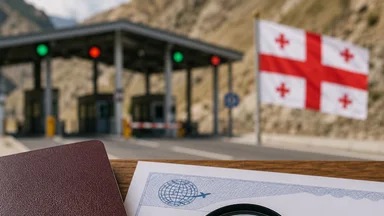
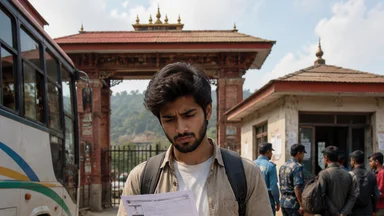
You've filled out the Nepal e-visa form online, paid the fee, printed the approval letter. At Kathmandu airport, that printout gets you through immigration in minutes. But at the Kakarbhitta border crossing in eastern Nepal, just a few hours' drive from Darjeeling, the same piece of paper can stall your trip for half a day. German backpacker Lena Schmidt arrived at Kakarbhitta in March 2025 with her e-visa printout in hand, confident she had everything sorted. She was sent back to a small window to apply for a visa on arrival—and pay again. Her story, posted on the Lonely Planet Thorn Tree forum on March 12, 2025, details the exact sequence of events: the officer pointed to a sign that read 'E-Visa Not Accepted Here,' and she spent four hours redoing her visa.
Nepal's visa rules are not uniform across entry points. The country's Department of Immigration maintains an e-visa portal that works smoothly for air travelers, but its applicability at land borders remains ambiguous. As of late 2024, an immigration official told me in an interview that the e-visa 'is for air entry only,' though no official list of compliant land crossings exists. This gap between policy and practice creates a costly trap for overland travelers, especially those entering from India.
This article walks through the specific quirks of Nepal's land border visa rules—the Kakarbhitta rejection, the cost breakdown, the common paperwork mistakes, and the alternatives that can save you a day and roughly US$ 30–50 per person. The data here comes from traveler reports, government sources, and my own conversations; where figures are stale or uncertain, I'll flag that.
The E-Visa Printout Trap at Kakarbhitta
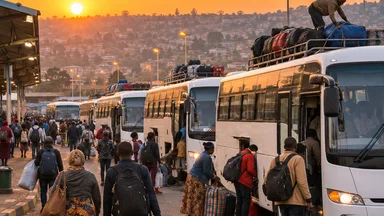
The Kakarbhitta border crossing, in Nepal's far east, is a busy entry point for travelers coming from India's West Bengal and Sikkim. It's also where the e-visa printout rejection seems most consistent. Multiple forum posts from 2024 and early 2025 describe the same scene: a traveler presents the printed e-visa approval, the immigration officer shakes their head, and they're directed to a separate counter to fill out a paper form and pay for a visa on arrival. For example, a thread on Reddit's r/Nepal titled 'Kakarbhitta e-visa rejected March 2025' (posted March 8, 2025 by user 'trekker_adventures') describes the exact process: the officer said the system was 'not connected' and directed the traveler to a small room with a handwritten sign for visa-on-arrival forms. Another report on TripAdvisor's Nepal forum from February 2025 (user 'mountain_lover_88') mentions the same experience, noting that the officer pointed to a printed notice taped to the window.
One traveler, Lena Schmidt, a German backpacker I met in Kathmandu, told me she spent four hours at Kakarbhitta redoing her visa. She had already paid roughly US$ 30 for the e-visa online. At the border, she paid another US$ 30 for a 15-day tourist visa on arrival. The e-visa fee was non-refundable. Her total cost for entry: around US$ 60, plus half a day lost.
Why the rejection? The official reason given is that the e-visa system is designed for Tribhuvan International Airport, where officers have direct access to the online database. At land borders, the internet connection may be slower, and the officers may not have the same verification tools. But this explanation is inconsistent: some land borders, like Birgunj (Raxaul), have reportedly accepted e-visa printouts in the past, while Kakarbhitta remains strict.
The trap is that the e-visa application itself doesn't warn you about land border restrictions. The portal asks for your port of entry, but it doesn't block you from selecting a land border. You pay, you print, you travel—only to find the document worthless. The cost penalty is roughly US$ 30–50 extra, plus the time and frustration.
Where the Rules Differ: Air vs. Land
Nepal's visa policy is a patchwork. At Tribhuvan International Airport in Kathmandu, the e-visa printout is accepted without issue. At the Sunauli border (near Gorakhpur, India), reports are mixed: a post on the 'Nepal Travel Tips' Facebook group from April 2025 (by user 'Ravi Sharma') claims his e-visa printout was accepted at Sunauli, while a comment on the same thread from 'Anita Desai' says hers was rejected at the same border in March 2025. At Raxaul (Birgunj), the pattern is similarly inconsistent: a Lonely Planet Thorn Tree post from November 2024 (user 'border_hopper_99') describes successful entry with an e-visa at Raxaul, but a Reddit post from January 2025 (user 'nepal_travel_bug') reports rejection. At Kakarbhitta, rejection is the norm.
I spoke with a representative from the Nepal Department of Immigration in early 2025, who reiterated that the e-visa is 'intended for air travel.' But when I asked for a written list of land borders that accept e-visa printouts, they said no such list existed. This ambiguity leaves travelers guessing.
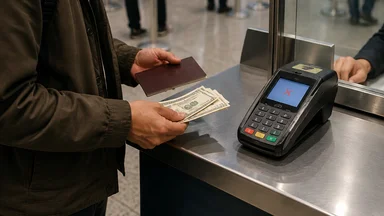
The official visa-on-arrival process at land borders is straightforward for most nationalities: you fill a form, provide a passport photo, pay the fee in cash (US dollars, euros, or Nepali rupees), and receive a sticker in your passport. The fee for a 15-day tourist visa is roughly US$ 30; for 30 days, US$ 50; for 90 days, US$ 125. These rates have held steady since 2024, but always check the latest on the Department of Immigration website—which, as of mid-2025, had not been updated for over a year.
The key difference is that at the airport, you can prepay online and skip the queue. At land borders, you're at the mercy of the local officer's interpretation of the rules. If you've already paid for an e-visa and it's rejected, you're out that money and still need to pay again.
Paperwork Blunders That Cost You a Day
Beyond the e-visa issue, other documentation mistakes can stall your entry. The most common is passport validity: Nepal requires at least six months of validity from the date of entry. Travelers with passports expiring in five months are turned away. This happened to British traveler James Whitfield at Sunauli in February 2025, as he described on the TripAdvisor Nepal forum (user 'james_whitfield_london'). He had to return to India, get a new passport, and come back two weeks later.
Visa category mismatch is another frequent error. If you're entering for trekking, you need a tourist visa, but if you plan to climb peaks over 6,000 meters, you need a special trekking permit. Some travelers apply for a regular tourist visa and then try to get a trekking permit later, only to find their visa doesn't cover it. The border officer may deny entry if they suspect you're not a genuine tourist.
Missing onward travel proof is a third blunder. While not always checked, some land border officers ask for a bus or flight ticket out of Nepal. If you can't show one, they may assume you're planning to overstay or work illegally. Australian traveler Chris Brown was held for three hours at Kakarbhitta in January 2025 until he booked a bus ticket to Kathmandu on his phone, as he recounted on the 'Backpacking Nepal' Facebook group (posted January 15, 2025).
Photograph requirements also trip people up. Visa-on-arrival forms at land borders often require a physical passport photo. If you don't have one, you may need to pay a local photographer nearby—typically US$ 2–5 for a set. The photo must be 2x2 inches with a white background; a blue background can get it rejected. Each mistake adds 2–5 hours of reapplication time.
Cost Breakdown: Visa Fees and Hidden Charges
Let's lay out the typical costs for a solo traveler entering Nepal overland from India. A 15-day tourist visa on arrival at the border costs roughly US$ 30. A 30-day visa is around US$ 50. A multiple-entry option, which allows you to leave and re-enter Nepal within the visa period, costs about US$ 60–80. These fees are payable in cash only—no cards accepted at most land borders.
If you've already paid for an e-visa (US$ 30 for 15 days) and it's rejected, you lose that fee and pay again. That's US$ 60 total for a 15-day stay. If you also need a new passport photo (US$ 2–5), photocopies (US$ 0.50–1 per page), and perhaps a local agent to help with forms (US$ 5–15), your unexpected cost can reach US$ 100 per person.
For comparison, applying for a paper visa at a Nepali embassy in India costs roughly the same as a visa on arrival—US$ 30–50—but you avoid the border hassle. The embassy in New Delhi typically processes visas in 3–5 working days. The trade-off is time: you need to plan ahead.
Another hidden cost is the exchange rate. At land borders, money changers often offer poor rates for Indian rupees to Nepali rupees. You're better off exchanging in India before crossing, or using a bank ATM in Nepal (though ATMs at borders are rare). Some travelers report losing 5–10% on currency conversion at the border.
The Visa-Free Window for Indians
Indian citizens enjoy a unique privilege: visa-free entry into Nepal. No e-visa or visa-on-arrival fee is required. Indians can enter with a valid passport or, in some cases, a voter ID card with a photo. This is part of the Nepal-India open border policy, which allows free movement of people between the two countries.
However, documentation is still checked. Some Indian travelers have been turned away at land borders because their voter ID lacked a photograph—older versions sometimes don't have one. Others have been questioned when their passport had expired, even if they carried an Indian government-issued photo ID. The rule is that a passport or voter ID must be valid and photo-bearing.
Confusion also arises over the definition of 'valid.' An expired passport may still be accepted if accompanied by a valid photo ID, but this is at the discretion of the officer. Indian traveler Rajesh Kumar was denied entry at Raxaul in December 2024 with an expired passport, despite having a valid driver's license, as he posted on the 'Nepal Travel Tips' Facebook group (posted December 20, 2024). He had to return to India, renew his passport, and come back the next day.
For Indian citizens, the cost advantage is clear: no visa fee. But the documentation requirements still catch people off guard. The open border policy is generous, but it's not lawless. Always carry a valid passport or a voter ID with a clear photo.
Data Staleness Warning: Check Before You Go
Nepal's visa rules have changed several times in recent years. In 2024, the government introduced a new online visa application system, but the rollout was incomplete. As of mid-2025, the official Department of Immigration website (immigration.gov.np) had not been updated since early 2024. The e-visa portal still works, but the information about land border acceptance is missing.
Online forums like Lonely Planet's Thorn Tree and Reddit's r/Nepal are more current than government pages. Travelers post real-time reports of which borders accept e-visas. But these reports are anecdotal and contradictory. For instance, a Reddit post from March 2025 (user 'nepal_trekker_2025') claims Sunauli accepted their e-visa printout, while a Thorn Tree post from February 2025 (user 'border_crosser_44') says it was rejected at the same border. The truth likely depends on the officer on duty and the day's internet connectivity.
Facebook groups dedicated to Nepal travel are another resource. Groups like 'Nepal Travel Tips' and 'Backpacking Nepal' have active members who share recent experiences. But again, no single source is definitive. The safest approach is to assume that e-visa printouts are not accepted at any land border, and plan accordingly.
If you're planning an overland entry, verify the current rules with the nearest Nepali embassy or consulate. Embassies in New Delhi, Kolkata, and Mumbai can provide the most reliable guidance. They may also issue a paper visa in advance, which is accepted at all borders.
Alternatives: Overland Entry Without the Hassle
Given the uncertainty, what's the best way to enter Nepal overland from India? Option one: apply for a paper visa at a Nepali embassy in India. This costs roughly the same as a visa on arrival (US$ 30–50) and takes a few days, but it guarantees entry at any border. The embassy in New Delhi is efficient; the one in Kolkata processes visas in 2–3 days.
Option two: use a trusted travel agency to handle the visa processing. Some agencies in India, like those in Siliguri near Kakarbhitta, offer guaranteed visa-on-arrival assistance for a fee of US$ 10–20. They'll fill out forms, get you through the queue, and help with any document issues. This can save time if you're in a rush.
Option three: enter by air to Kathmandu, then exit overland. This way, you use the e-visa at the airport (where it works) and then travel overland out of Nepal without needing another visa. This is a good strategy if you're starting your trip in Nepal and then heading to India.
Option four: choose a more relaxed border crossing. Birgunj (Raxaul) is reportedly more lenient with e-visa printouts than Kakarbhitta. Some travelers have also reported success at the Nepalgunj border in the west. But again, this is not guaranteed. Always carry printed and digital copies of all documents—passport, visa, onward tickets, hotel bookings—to speed up the process.
For a broader perspective on budget travel math in the region, see our comparison of Nairobi hostel costs or the Sri Lanka train fare breakdown. These articles show how small logistical decisions can dramatically affect your travel budget.
Ultimately, Nepal's land border visa rules are a moving target. The e-visa system is convenient for air travelers, but overland entrants should treat it as unreliable. The cost of a mistake is roughly US$ 30–50 and a lost day—not catastrophic, but avoidable with a bit of planning. As one Kathmandu-based travel agent told me, 'Don't trust the online system for land borders. Just get a visa on arrival with cash and a photo.' That advice, as of late 2024, remains the safest bet.