Customer Complaint Data That Shows Which Banks Close Accounts After a Single Small Overdraft
Imagine you accidentally spend $12 more than you have in your checking account. You expect a modest fee, maybe a notification. Instead, your bank closes your account, reports you to a consumer database, and leaves you unable to open a new account anywhere else for years. According to CFPB complaints, thousands of Americans experience this each year. The data collected by the Consumer Financial Protection Bureau (CFPB) shows a clear pattern: a single small overdraft can end a banking relationship, especially at large institutions.
The Overdraft That Ends a Banking Relationship
Small overdrafts—often under $20—trigger permanent account closures more frequently than most consumers realize. Banks treat a negative balance, even a minor one, as a risk signal. In internal risk models, a customer who overdrafts, even once, is statistically more likely to default on fees or overdraw again. Rather than absorb that perceived risk, many banks simply close the account.
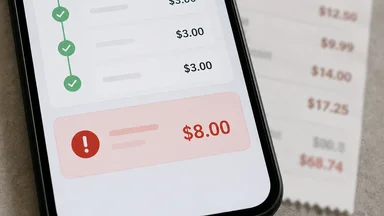
Consumers rarely receive a clear reason for the shutdown. A typical closure letter from a large bank like Wells Fargo or Bank of America might cite “account activity inconsistent with our policies” or “excessive overdrafts,” even when the overdraft was a single event. The real reason—that the bank no longer wants the customer—is buried in fine print. For instance, a 2022 CFPB complaint from a California customer described receiving a letter that said only “your account has been closed due to a negative balance” without any mention of the specific overdraft amount, which was $8.
The consequences are severe. Once an account is closed for cause, the bank often reports the customer to ChexSystems, a consumer reporting agency used by most banks to screen new applicants. A negative ChexSystems record can block a person from opening a checking or savings account at any participating institution for up to seven years.
This means one $5 mistake can push a person out of mainstream banking entirely, forcing them into costly alternatives like prepaid cards or check-cashing services. The irony is that the bank avoids a small risk by creating a much larger one for the consumer.
What the Complaint Data Actually Shows
The CFPB receives thousands of complaints each year about bank account closures related to overdrafts. While the agency does not publish a simple “closure after $5 overdraft” category, researchers and journalists have combed through the data and found a clear pattern. Complaints spike among customers of large national banks, and the amounts involved are often in the single digits.
Wells Fargo and Bank of America appear frequently in these complaints. Customers describe having accounts for years with no issues, then one small overdraft—say, $8 or $15—leads to immediate closure. In many cases, the customer was not even aware of the overdraft until they tried to use their debit card and found it declined.
Credit unions, by contrast, appear less aggressive. While they also close accounts, the threshold tends to be higher. A credit union might allow a customer to go negative by $100 before taking action, and they often offer a grace period or a warning call. The difference reflects a different business model: credit unions are member-owned and more focused on relationship banking.
Regulators collect this data but rarely act on individual complaints. The CFPB’s complaint database is designed to identify systemic issues, not to resolve each case. A single closure complaint may produce a form letter from the bank, but no remedy. The bank is not required to reverse the closure or remove the ChexSystems report.
The pattern holds across multiple large banks. A 2023 analysis by the Consumer Federation of America found that among the top ten U.S. banks by assets, seven had complaint narratives describing account closures after overdrafts of less than $20. The banks did not dispute the facts in their responses; they simply cited policy.
The Revenue Logic Behind Quick Closures
Why would a bank close an account over a $12 overdraft? The answer lies in profitability. Low-balance accounts generate little revenue from interest or transaction fees, and they carry higher operational costs per dollar held. Overdraft fees have been a major profit center, but regulatory caps and public pressure have reduced their yield. As of late 2024, many banks limit overdraft fees to around $30–35 per occurrence, and some have eliminated them entirely. Closing an account costs the bank nothing. In fact, it saves the cost of servicing a customer who may trigger more fees or require manual intervention. The algorithm that flags accounts for closure is designed to identify high-maintenance customers—those with low balances, frequent small transactions, or any negative balance. A single overdraft is enough to trigger the flag. The profit motive overrides relationship banking. Banks talk about loyalty and long-term value, but their risk models treat a customer with a $200 average balance as a liability. The cost of sending statements, maintaining online banking, and staffing branches is spread across all customers. Those who keep high balances subsidize those who don’t. When a low-balance customer overdrafts, the bank sees a future cost, not a future profit. This logic is not inherently malicious, but it produces harsh outcomes. A bank that closes an account over a $5 overdraft is acting rationally within its own incentive structure. The problem is that the consumer bears the full cost of that rationality, with no recourse and no warning.
Some industry defenders argue that banks must manage risk and that customers who overdraw are more likely to default on other obligations. But the data does not support a blanket judgment. Many customers who experience a single small overdraft have otherwise clean histories. They may have simply mis-timed a deposit or forgotten about a subscription charge.
How ChexSystems Turns a Mistake Into a Blacklist
ChexSystems is the central nervous system of account closure reporting. When a bank closes an account for what it deems a “negative” reason—overdraft, unpaid fees, suspected fraud—it reports the consumer to ChexSystems. That report stays on file for up to seven years, and any bank that subscribes to ChexSystems can see it when a consumer applies for a new account.
The system was originally designed to prevent fraud and serial abusers. But in practice, it catches many consumers who made a single, honest mistake. A $10 overdraft that was repaid the next day can still appear as a negative event. The bank has no obligation to remove the report, even if the consumer later pays the fee.
Second-chance accounts are marketed as a solution, but they come with high fees and limited features. These accounts often have monthly maintenance fees of $10–15, no overdraft protection, and no check-writing ability. They are a profitable product for banks, but they trap consumers in a cycle of fees that make it harder to build a financial buffer.
There is no formal appeal process for a ChexSystems record. Consumers can dispute inaccuracies, but if the bank confirms the report as accurate—even if the overdraft was $2—the record stays. The data broker profits from maintaining the exclusion, and the consumer has little power to change the outcome.
The situation is particularly bleak for low-income consumers. Without access to a mainstream checking account, they turn to prepaid cards and check-cashing services that charge high fees. A single small overdraft can cost hundreds of dollars in extra fees over the following years, all because the bank decided the customer was not worth keeping.
A Case Study: One Customer, One $12 Fee
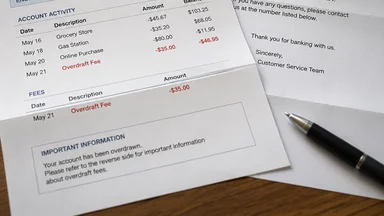
Consider the story of Maria, a 34-year-old home health aide in Texas. She had held a checking account at a large national bank for six years. Her average balance was around $300. One month, she forgot about a $12 subscription charge that hit her account when the balance was $8. The bank charged a $34 overdraft fee, and the next day her account was negative by $26. She deposited her paycheck the following morning, covering the negative balance and the fee.
Two days later, she received a letter stating that her account was closed due to “excessive overdrafts.” She called the bank and was told the closure was final. A customer service representative mentioned that the bank’s policy is to close any account that goes negative, even for one day. Maria had never overdraw before.
The bank reported her to ChexSystems. She spent the next three months trying to open a new account at other banks, only to be denied. She eventually found a credit union that offered a second-chance account with a $12 monthly fee. She paid that fee for two years before the credit union converted her to a standard account.
Maria’s story is not unusual. Similar accounts appear by the hundreds in CFPB complaints. The amounts are small—$5, $12, $18—but the consequences are large. The banks rarely reinstate the account, even when the customer has a long history of responsible use.
The bank’s decision is cost-driven. Maria’s account generated little profit, and her single overdraft made her a liability in the bank’s risk model. The bank saved a few dollars in servicing costs, but Maria lost access to affordable banking for years.
Regulatory Gaps That Leave Consumers Exposed
There is no federal rule that prohibits a bank from closing an account because of a single small overdraft. Banks are private businesses, and they can choose their customers, as long as they do not discriminate on protected grounds. A policy of closing accounts after any negative balance is perfectly legal.
The CFPB complaint process is designed to collect data, not to provide remedies. When a consumer files a complaint, the bank is required to respond, but the response is often a form letter stating that the closure was within policy. The CFPB does not have the authority to force a bank to reopen an account or remove a ChexSystems report.
Banks voluntarily report account closures to ChexSystems, but they face no penalty for reporting a small overdraft as a negative event. The Fair Credit Reporting Act allows consumers to dispute inaccurate information, but if the bank confirms the report as accurate—even if the consumer considers the closure unfair—the record stands.
State laws vary, but enforcement is weak. A few states have attempted to regulate ChexSystems reporting or require banks to give consumers a chance to cure an overdraft before closing the account. But these laws are rarely enforced, and banks often preempt them with federal banking regulations.
Lawmakers rarely prioritize this issue. Banking regulation tends to focus on systemic risk, mortgage lending, and consumer credit. The problem of account closures after small overdrafts is seen as a niche concern. But for the thousands of consumers affected each year, it is a life-altering event that pushes them to the margins of the financial system.
What to Do If Your Account Gets Closed
If your bank closes your account after a small overdraft, the first step is to request a written explanation. The bank is not required to provide one, but many will send a letter citing policy. Keep that letter for your records. It may help if you later dispute the ChexSystems report.
Immediately request a copy of your ChexSystems report. You are entitled to one free report per year. Review it for accuracy. If the bank reported the closure as a “loss” or “charge-off” when you actually repaid the overdraft, you can dispute that error. If the report is accurate but you believe the closure was unfair, you can add a consumer statement explaining your side.
File a complaint with the CFPB. Even if the CFPB cannot force the bank to change its decision, your complaint adds to the public record and helps regulators understand the scope of the problem. It also puts the bank on notice that its actions are being tracked.
Consider switching to a credit union or an online bank. Many credit unions have more lenient policies and are less likely to close accounts over small overdrafts. Online banks like those that focus on low-income customers often offer second-chance accounts with lower fees than traditional banks.
Finally, build a buffer in your account to avoid future triggers. Even a $50 cushion can prevent a small overdraft from becoming a closure event. This is not always possible for people living paycheck to paycheck, but it is the most reliable way to stay in the banking system.